Sometimes the impact of digital skills education reveals itself in the most urgent and human moments.
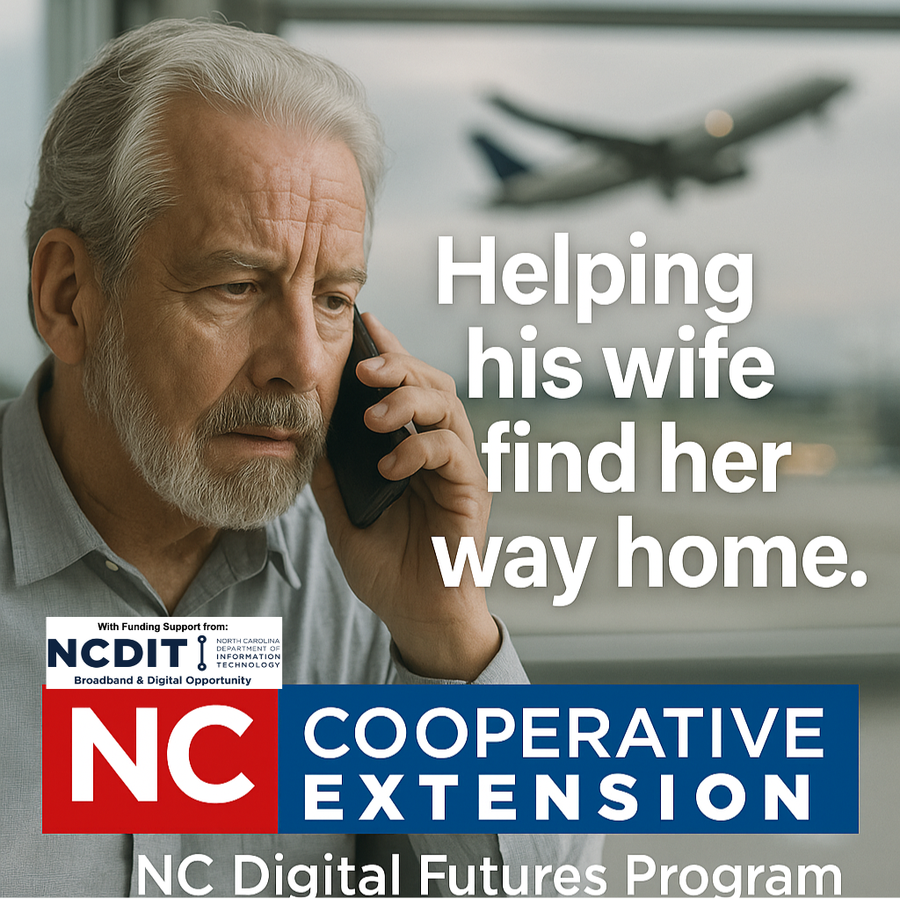
Recently, a regular participant in the Asheboro Senior Center’s Tech Talk series—hosted by Digital Skills Educator Hannah Bradley—found himself in a stressful situation. His wife was stranded at the airport. Her phone had frozen, and she was unable to access her Maps app to navigate home. She was alone, anxious, and unable to get the help she needed.
In that moment of uncertainty, he knew exactly who to call.
Hannah Bradley calmly walked him through steps to reset and troubleshoot the phone. Together, over the phone, they solved the issue. The Maps app reopened, the directions appeared, and his wife was able to make it home safely.
This is the power of digital confidence. It’s not just about learning to send emails or join Zoom meetings—it’s about building the skills and assurance needed to handle real-life problems when they arise. For older adults especially, these skills can restore independence, reduce anxiety, and even protect their safety.
Thanks to the NC Digital Futures Program, seniors across North Carolina are gaining the knowledge they need to navigate a connected world—whether it’s in the classroom or, as in this case, over the phone in a moment of need.
Learn more about how the NC Digital Futures Program is supporting communities statewide